Eastern subterranean termites cause structural damage by consuming cellulose inside structural framing, baseboards, and subflooring from the inside out. In Buffalo neighborhoods like Allentown, Elmwood Village, and the…
Eastern subterranean termites cause structural damage by consuming cellulose inside structural framing, baseboards, and subflooring from the inside out. In Buffalo neighborhoods like Allentown, Elmwood Village, and the West Side, century-old wood-frame homes built on stone or unmortared rubble foundations provide easy subterranean entry points. Termites navigate through microscopic masonry voids, stone rubble mortar joints, and expansion gaps in poured concrete basements to reach structural sill plates. Moisture issues common to Parkside basements or low-elevation parcels near the First Ward accelerate cellulose decay, creating favorable conditions for colony expansion. Worker termites consume wood continuous hours a day, bypassing surface paint and leaving outer wood veneers intact until structural integrity fails.
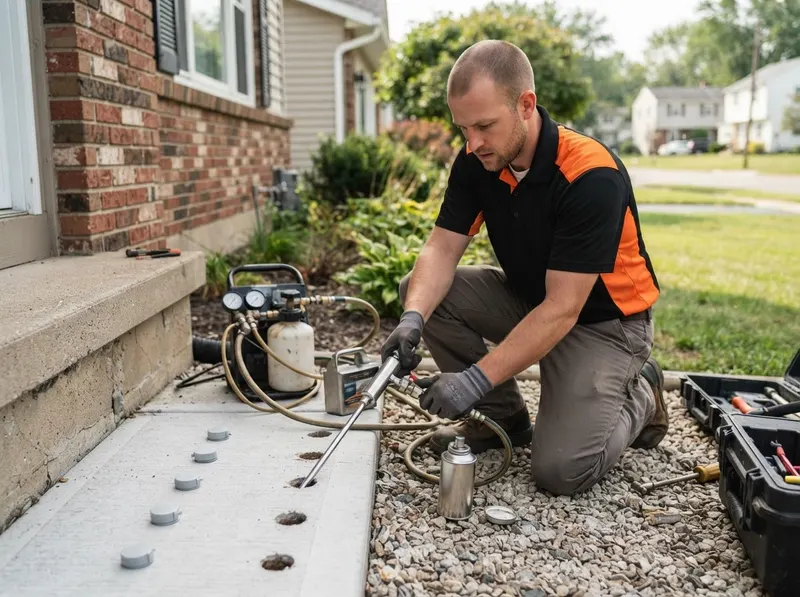
Subterranean termite defense utilizes two primary eradication methods: non-repellent liquid soil treatments and direct structural injection. A continuous liquid chemical barrier binds directly to soil particles around the exterior foundation perimeter, requiring trenching along exterior walls and sub-slab drilling through basement floors or attached garage slabs every 12 inches. Worker termites pass through the undetectable compound, transferring the active agent throughout the entire subterranean colony via social grooming and food sharing within 60 to 90 days. For structures where high water tables or stone-rubble foundations prevent unbroken chemical barriers, localized direct wood injections with foaming termiticides penetrate nested galleries immediately.
Decision trade-offs between liquid barriers and localized baiting stations depend on the foundation composition. A liquid chemical barrier establishes prompt, continuous protection around poured concrete basements found throughout North Park and Kaisertown, offering uninterrupted perimeter defense. In contrast, properties bordering expansive clay soils or damp parklands near Delaware Park often require supplemental monitoring baiting stations placed at 10-foot intervals to intercept colonies foraging from deep underground nests. Guardian Pest Solutions isolates and neutralizes active subterranean populations at the source without forcing homeowners into 12-month recurring treatment contracts.
Every job gets a firm, written price after a free on-site visit.
Tell us about your subterranean termite defense job in Buffalo and we'll send a clear, written quote, usually the same day.
 Guardian Pest Solutions