Rodent control and structural exclusion addresses the physical vulnerabilities of historic regional architecture. Pre-war homes in Allentown, the Elmwood Village, and the West Side frequently feature balloon-frame…
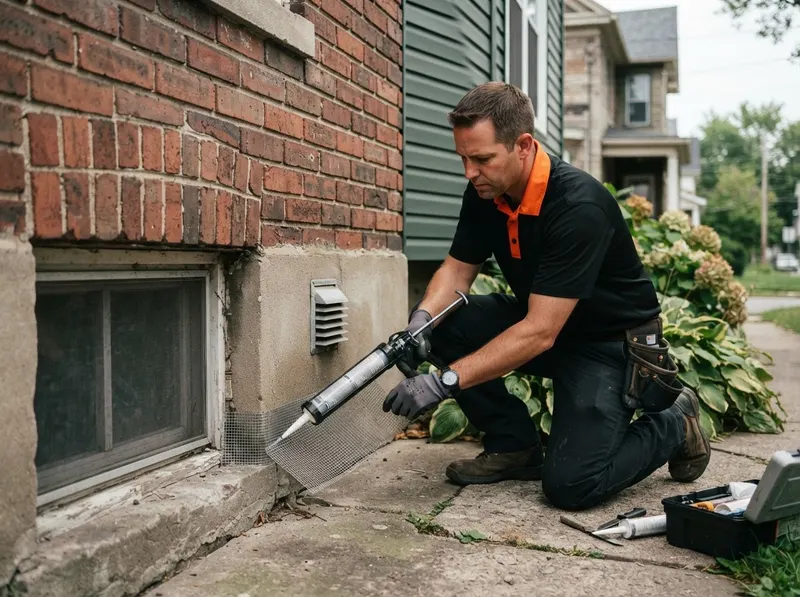
Rodent control and structural exclusion addresses the physical vulnerabilities of historic regional architecture. Pre-war homes in Allentown, the Elmwood Village, and the West Side frequently feature balloon-frame construction, where wall studs run uninterrupted from stone foundation sills straight to attic eaves. This architectural layout creates open, vertical highway channels for rodents behind plaster and lathe. Mice enter openings as narrow as one-quarter inch, while Norway rats squeeze through gaps of one-half inch along deteriorating mortar, settling porch skirts, and unshielded dryer vents. Guardian Pest Solutions rejects standard perimeter pesticide sprays that leave the structural envelope exposed. Instead, technicians deploy copper mesh, galvanized 19-gauge steel hardware cloth, and elastomeric sealants along perimeter baseboards, sill plates, and utility penetrations to halt travel routes permanently.
Selecting structural exclusion over recurring broadcast poison treatments eliminates the biological risks of secondary poisoning and interior carcass decomposition. Chemical baiting without structural exclusion allows exterior rodents from adjacent parcels in dense streetscapes like South Buffalo, Black Rock, or Kaisertown to continuously replenish interior populations through crawl spaces and rub-marked rim joists. When exterior penetrations remain open, poisoned rodents regularly expire within insulated wall cavities, producing persistent odors, carcass flies, and contaminated fiberglass batting that requires structural remediation. Exclusion establishes a permanent physical boundary. Homeowners trade the small initial investment of custom physical carpentry repairs against the recurring expense of monthly extermination programs that fail to stop ingress.
Cold-weather migrations intensify as autumn temperatures drop near Lake Erie, driving rodents inward toward the boiler systems and warmth of basements in North Park, Parkside, and the First Ward. Technicians execute a precise four-step containment protocol: Step 1 involves an attic-to-basement architectural audit mapping all droppings, gnaw marks on wiring, and exterior mortar voids. Step 2 installs secured, locked rodenticide stations in unfinished basements and mechanical rooms away from domestic pets. Step 3 mechanically seals exterior gas lines, water mains, and cellar hatchways using metal flashing and masonry fasteners. Step 4 conducts a 14-day check to clear trap catches, sanitize localized nesting sites, and verify zero perimeter breach points.
Every job gets a firm, written price after a free on-site visit.
Tell us about your rodent control and structural exclusion job in Buffalo and we'll send a clear, written quote, usually the same day.
 Guardian Pest Solutions