Commercial sanitation audits diagnose structural vulnerabilities before health inspectors or retail patrons detect biological activity. A standard commercial pest service typically applies monthly barrier sprays along…
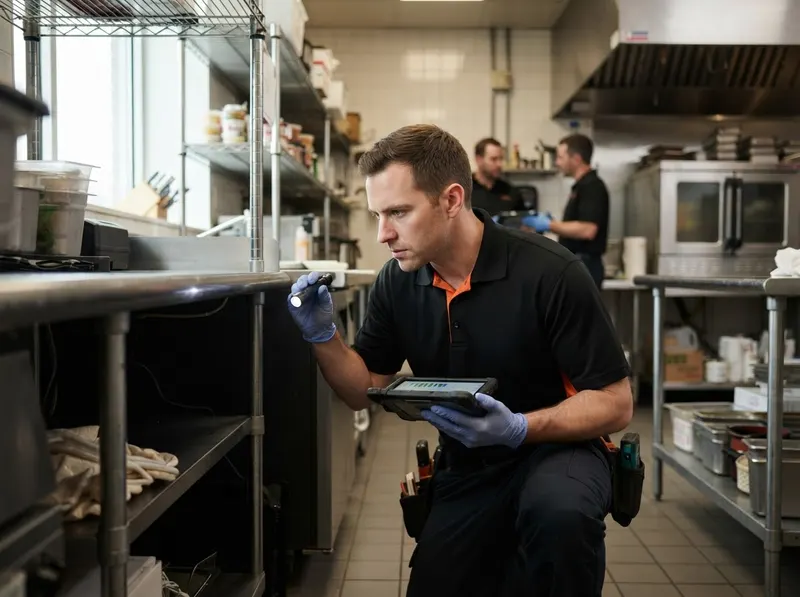
Commercial sanitation audits diagnose structural vulnerabilities before health inspectors or retail patrons detect biological activity. A standard commercial pest service typically applies monthly barrier sprays along baseboards; a sanitation audit identifies the broken tile grout, degraded door sweeps, floor sink biofilm accumulation, and moisture pockets that attract infestations initially. In dense multi-tenant commercial strips throughout Allentown and Elmwood Village, shared party walls and historic rubble foundations allow subterranean rodents and German cockroaches to transit across property lines unchecked. For industrial warehousing and food processing facilities across Black Rock and the First Ward, an audit provides precise structural diagnostics that pinpoint failure points in loading dock seals, overhead garage doors, and raw material intake stations.
Audits align physical facilities with regulatory standards, including the FDA Food Safety Modernization Act, USDA guidelines, and Erie County Department of Health sanitation codes. The process relies on measurable criteria: thermal leak detection along refrigeration lines, juvenile-to-adult population ratios on diagnostic monitors, and physical measurement of structural clearances (such as the standard 18-inch white floor perimeter border). In hospitality operations near the Richardson Olmsted Campus and dining corridors along the West Side, high-turnover food preparation generates organic grease accumulations under floor-mounted heavy equipment, creating micro-environments where fly larvae flourish despite visible surface cleanliness.
Choosing an audit over a recurring treatment schedule provides actionable facility control without lock-in subscriptions. If an operation faces chronic pest presence, repetitive chemical applications only mask chronic structural failures. The trade-off is organizational: an audit requires internal maintenance coordination to seal expansion joints, replace worn hydraulic dock leveler brushes, and remediate standing water behind mop sinks. Facilities in South Buffalo, Kaisertown, and North Park utilize diagnostic auditing to document pest-free supply chains, protect insulation and electrical wiring from gnawing damage, and establish biological accountability before minor incursions escalate into reportable regulatory shutdowns.
Every job gets a firm, written price after a free on-site visit.
Tell us about your commercial sanitation and pest auditing job in Buffalo and we'll send a clear, written quote, usually the same day.
 Guardian Pest Solutions