Securing a professional pest control service in Buffalo stops active biological destruction before structural timber, insulation, and wiring sustain permanent damage. Guardian Pest Solutions deploys targeted treatments and physical exclusion mechanics across Western New York, bypassing the mandatory 12-month lock-in contracts common to national chains.
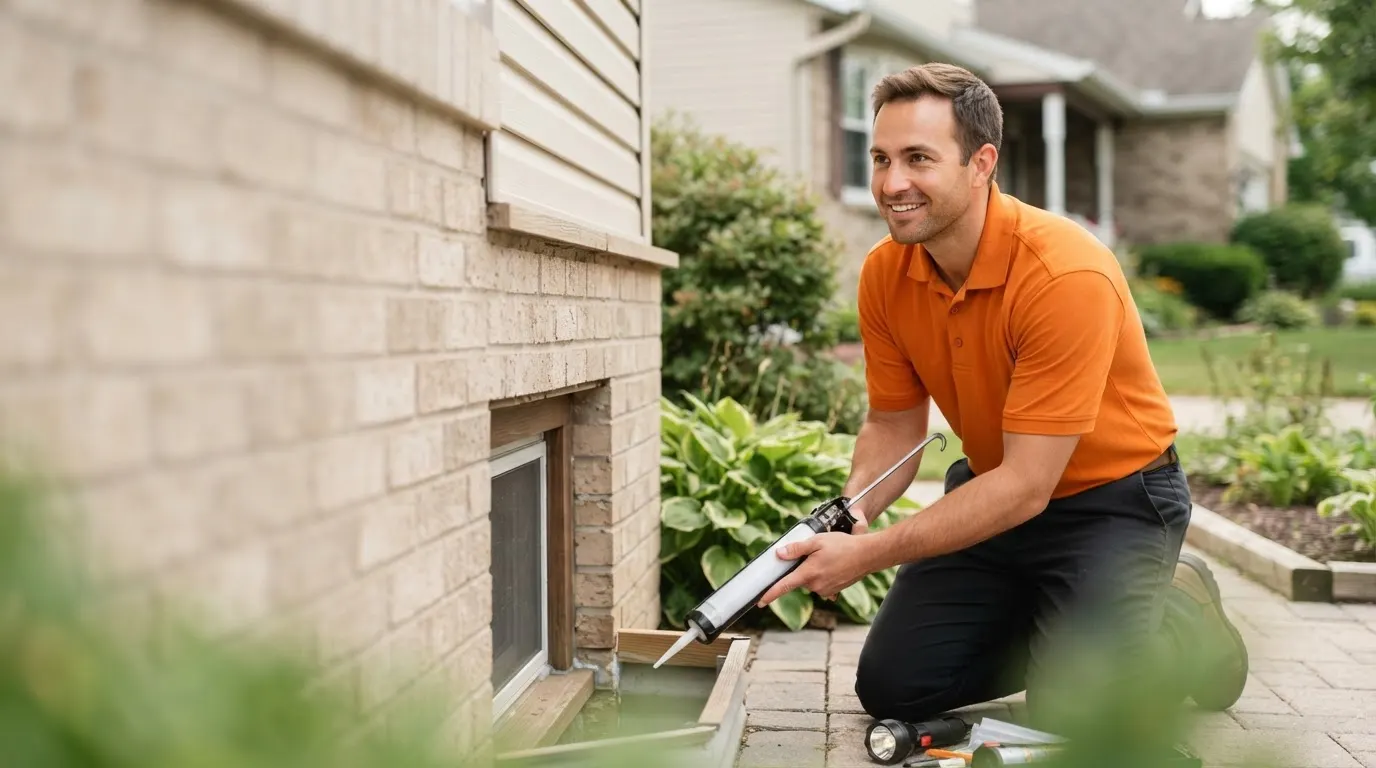
A professional pest control service in Buffalo is a specialized biological management and structural exclusion operation that eliminates active insect or rodent infestations from residential and commercial buildings across Erie County.
Every service reflects the same meticulous attention to detail, whether it's a single job or a larger pest control sevice project across Buffalo.
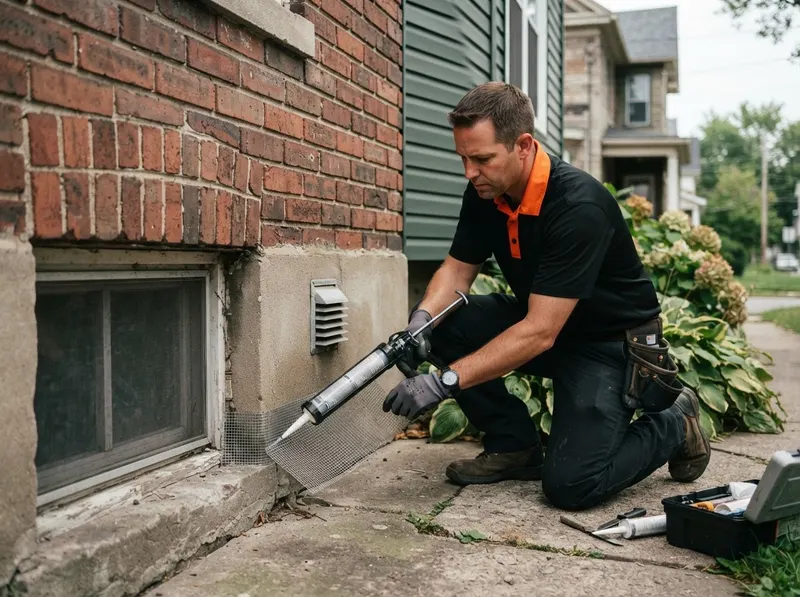
Rodent control targets Norway rats and house mice navigating structural foundations, stone basements, and balloon framing. Field technicians locate rub marks, gnawed floor joists, and droppings, installing physical hardware cloth, galvanized metal flashing, and expanding foam to seal gaps exceeding 0.25 inches. Interior populations are captured using secured mechanical stations, avoiding indoor carcass decay and foul odors within interior wall voids. Technicians map ingress points around exterior utility lines, basement window wells, and degraded coal chutes. Trapping grids run continuously until monitoring sensors indicate zero feeding activity, ensuring full depopulation before structural sealing cures.
Get a quote →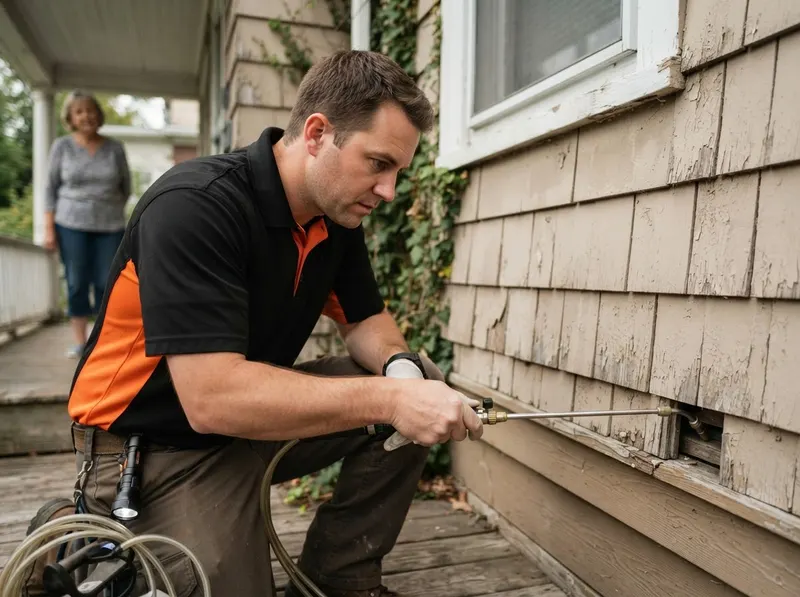
Carpenter ant management focuses on Camponotus pennsylvanicus populations nesting inside moisture-compromised sill plates, rooflines, and wall cavities. Technicians trace frass deposits and satellite nesting galleries, deploying targeted non-repellent liquid transfers and localized baiting systems. The method ensures foraging worker ants convey the active compound directly to the reproductive queen, neutralizing the colony without requiring structural demolition. Inspections evaluate roof runoff along exterior fascias, plumbing chases under bathroom subfloors, and proximity to overhanging shade trees. Micro-dust formulations are injected into hollow wood studs to neutralize hidden satellite nests, followed by perimeter liquid applications that create an exterior foraging barrier.
Get a quote →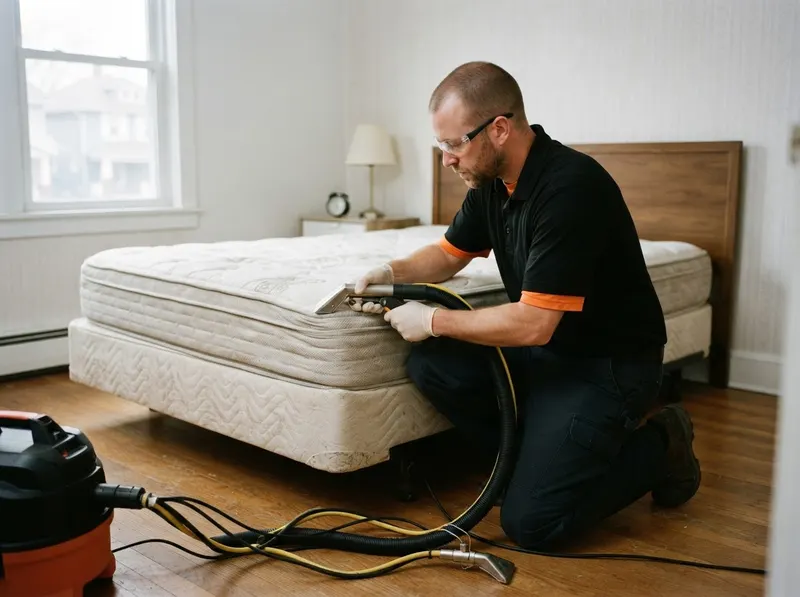
Bed bug remediation eradicates Cimex lectularius through a combination of precision insecticide applications, crack-and-crevice treatments, and localized heat extraction. Every mattress seam, box spring, baseboard perimeter, and electrical switch plate undergoes thorough physical inspection. Residual application protocols disrupt all biological life stages, including egg clusters, breaking the reproductive cycle without mandating recurring multi-month service plans. Specialized HEPA vacuuming removes shed exoskeletons, viable nymphs, and egg groupings prior to product application. Desiccant dust formulations placed beneath baseboards and outlet faceplates provide multi-month protective barriers that desiccate wandering insects without airborne drift.
Get a quote →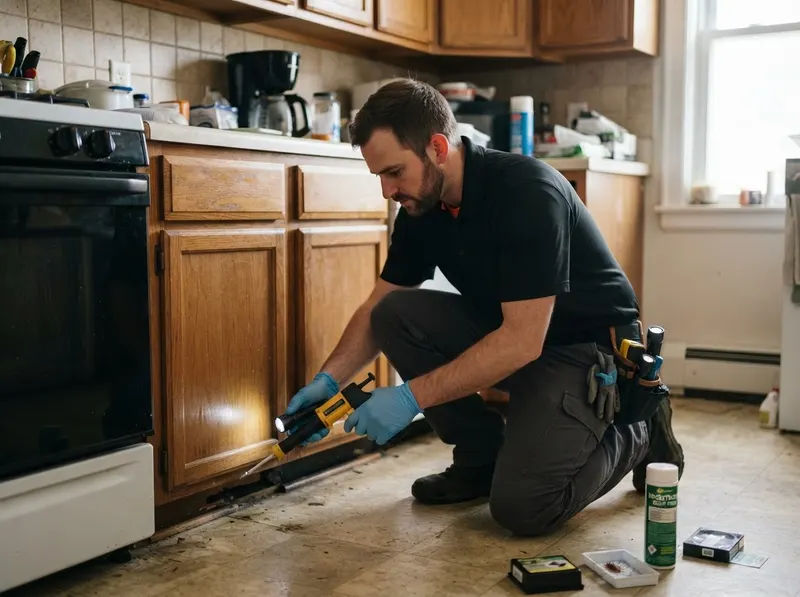
Cockroach eradication resolves persistent German and American cockroach infestations inside multi-family kitchens, food service areas, and moisture-heavy basements. Technicians identify aggregation harbors behind appliance motor mounts and cabinetry joints, dispensing insect growth regulators and high-potency gel matrix baits. This dual-action protocol halts nymph development and secures rapid population mortality while keeping food preparation areas protected. Precision gel placements target hinge corners, pipe collars, and under-counter recesses where insects forage at night. Sticky monitoring cards verify colony depletion rates weekly, pinpointing lingering micro-pockets within shared plumbing walls without relying on broadcast pesticide mists.
Get a quote →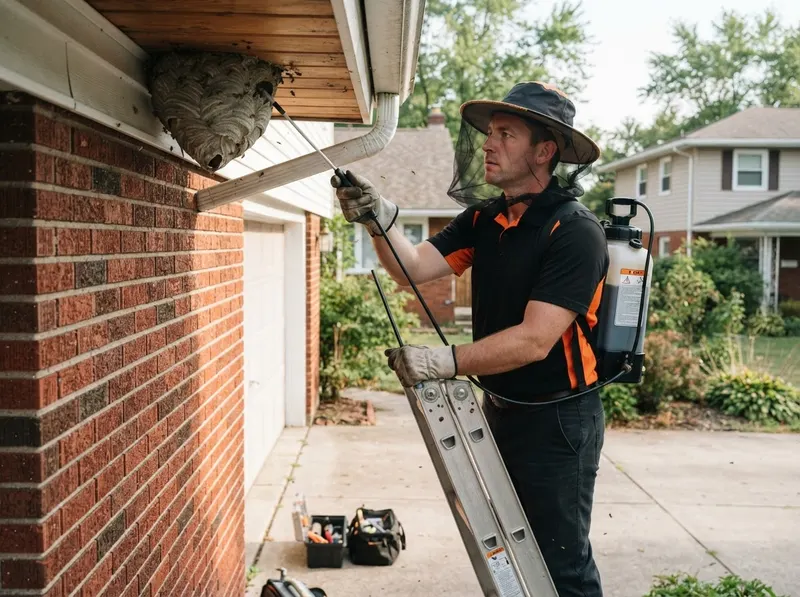
Stinging insect remediation safely neutralizes paper wasps, bald-faced hornets, and subterranean yellowjackets nesting along structural soffits, porch ceilings, and foundation voids. Technicians use specialized directional equipment to apply targeted formulations directly into the nest core, dropping defensive guard wasps instantly. The entire physical nest structure is detached and removed to prevent future colony adoption and secondary scavenging by carpet beetles. Ground nest cavities undergo subsurface non-repellent injection that floods subterranean chambers, destroying hidden queen cells. Structural voids beneath clapboards or aluminum siding are sealed post-removal to eliminate established chemical pheromone trails that attract subsequent spring queens.
Get a quote →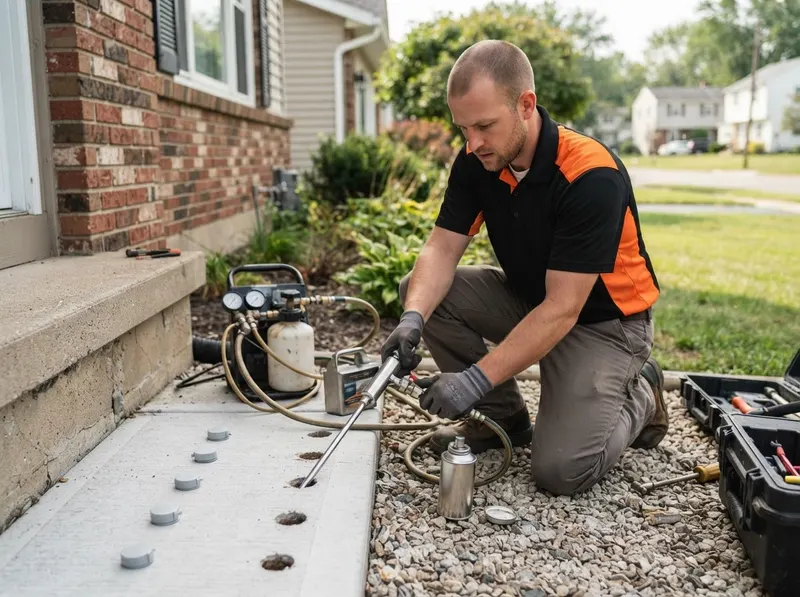
Subterranean termite defense halts Reticulitermes flavipes before cellulose-feeding colonies compromise load-bearing studs and subflooring. Eradication involves continuous perimeter trenching, sub-slab foundation injection, and the installation of monitoring stations containing slow-acting growth inhibitors. These worker-distributed agents eliminate the entire subterranean colony, protecting historic stone and wood-frame architecture from catastrophic structural collapse. Technicians rod along exterior foundation footings, placing liquid termiticides that bond to clay soil particles for prolonged residual defense. Interior slab cracks and plumbing penetrations are injected under high pressure to form an unbroken chemical barrier beneath basement concrete.
Get a quote →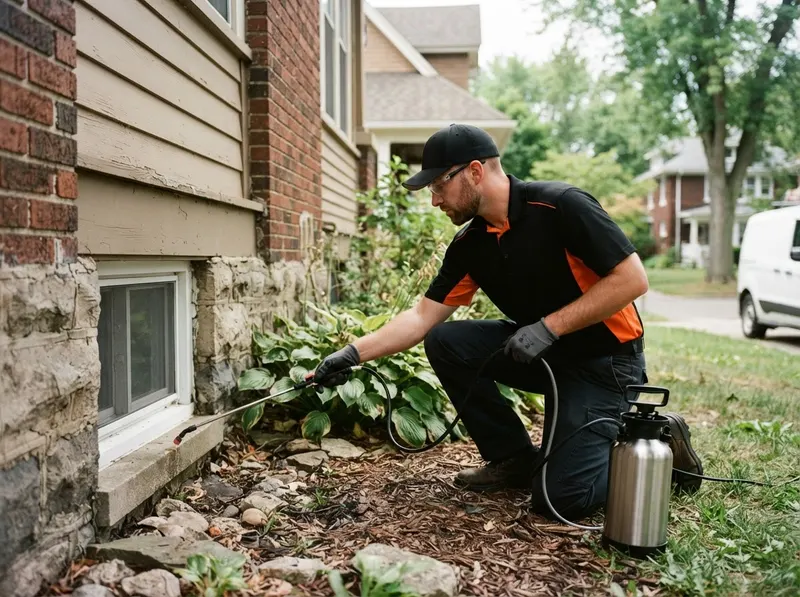
Spider and seasonal invader suppression targets wolf spiders, cellar spiders, centipedes, and silverfish harbored in damp sub-levels, stone foundation ledges, and floor drain margins. Treatment combines focused exterior foundation perimeter barriers with interior non-toxic glue boards and desiccant dusts in crawl spaces. Eliminating baseline insect food sources stabilizes indoor ecology and stops predatory arachnid entry. De-webbing poles clear exterior eaves, window wells, and basement joist bays, physically removing egg sacs and webbing structures. Micro-encapsulated exterior foundation bands establish a durable perimeter line that resists wash-off from lake-effect rainfall and snowmelt.
Get a quote →
Commercial pest management protects food distribution hubs, medical facilities, restaurants, and warehouse docks throughout Erie County. Technicians provide detailed health code documentation, logbook maintenance, insect light trap servicing, and tamper-resistant exterior bait station monitoring. Protocols conform strictly to municipal inspection guidelines, delivering verified biological control without interrupting daily patron operations. Detailed trend analyses track seasonal capture rates, identifying compromised shipping pallets or exterior dock seals before populations establish. Tamper-proof bait boxes anchored to exterior concrete perimeters stop foraging vermin before they penetrate primary receiving bays.
Get a quote →You get a firm, itemized quote for your pest control sevice before any work begins, no surprises, no pressure.
Careful prep, tidy work, and a full cleanup when we are done. We treat your home and belongings like our own.
The same trusted, background-checked team from the first call to the final check.
Selecting the proper eradication protocol requires aligning the biological traits of the target species with the structural composition of the building. If a home exhibits localized interior insect activity such as German cockroaches or sudden stinging insect nests, choose targeted crack-and-crevice application or focused void injection; this approach isolates the active colony directly without saturating living quarters. If the issue involves Norway rats, house mice, or seasonal rodent runs, choose structural exclusion coupled with mechanical trapping; exclusion installs physical metal barriers across masonry gaps, pipe chases, and foundation vents to prevent re-entry, whereas continuous chemical baiting alone leaves the entry pathways accessible.
If subterranean termites or carpenter ants threaten load-bearing framing, choose termiticide soil barriers or slow-acting non-repellent transfer agents; these allow foraging insects to carry the active ingredient into the queen's gallery, whereas over-the-counter contact repellents scatter the colony deeper into wall cavities. The fundamental trade-off lies in upfront physical remediation versus ongoing suppression: physical exclusion and deep-gallery treatments require specialized labor and masonry alterations, whereas surface perimeter spraying demands lower immediate site work but fails to eliminate established root-cause nests inside structural framing. Homeowners living in historic neighborhoods like Allentown or Parkside must prioritize foundation mortar repointing and sheet metal flashing alongside chemical applications; modern drywall-and-poured-concrete structures in North Park can often rely primarily on precise exterior perimeter soil bands and interior mechanical interception.
Every project gets a firm, written price after a free on-site visit. Ranges below for orientation.
Tell us about your pest control sevice job and we'll send a clear, written quote, usually the same day. Or just call and talk to a real Buffalo pro.
(716) 503-3128
Buffalo's architectural heritage poses distinct pest vulnerabilities, particularly the classic late-19th-century balloon-framed wood houses and porous rubble stone basements common in Allentown, the West Side, and Black Rock. These historic structures feature uninterrupted interior wall cavities running from the cellar floor directly up to the roof rafters, serving as express pathways for Norway rats seeking winter warmth during intense Lake Erie cold snaps. Furthermore, the extensive urban canopy flanking Delaware Park, the Frank Lloyd Wright Martin House, and the Olmsted parkway system leads to heavy carpenter ant pressure as decaying limbs drop close to damp roof eaves, demanding localized structural sealing rather than superficial surface treatments. In South Buffalo and the First Ward, aging brick rowhomes and industrial-adjacent corridors experience localized subterranean termite foraging along damp foundation footings near the Buffalo River. In the densely settled Elmwood Village, multi-family Victorian conversions with shared plumbing walls and historic subfloors create rapid transit corridors for German cockroaches and bed bugs, requiring targeted crack-and-crevice void applications rather than standard baseboard sprays. Kaisertown and North Park residential properties frequently face seasonal in-ground yellowjacket pressure in late summer, where heavy clay soils force stinging insect queens to establish nests in abandoned rodent burrows or raised garden beds right against exterior foundation lines.
Free estimates for Buffalo & the surrounding area.
 Guardian Pest Solutions